In October 2025 the United States and Australia signed a critical minerals framework after five months of negotiation. The two governments undertook to put at least $1 billion of financing into projects in both countries within six months, and the US Export‑Import Bank issued seven letters of interest worth a combined $2.2 billion, which it said could catalyse up to $5 billion in total investment.
A year on, the question worth asking is not whether the framework was signed. It is what got built.
What has actually moved
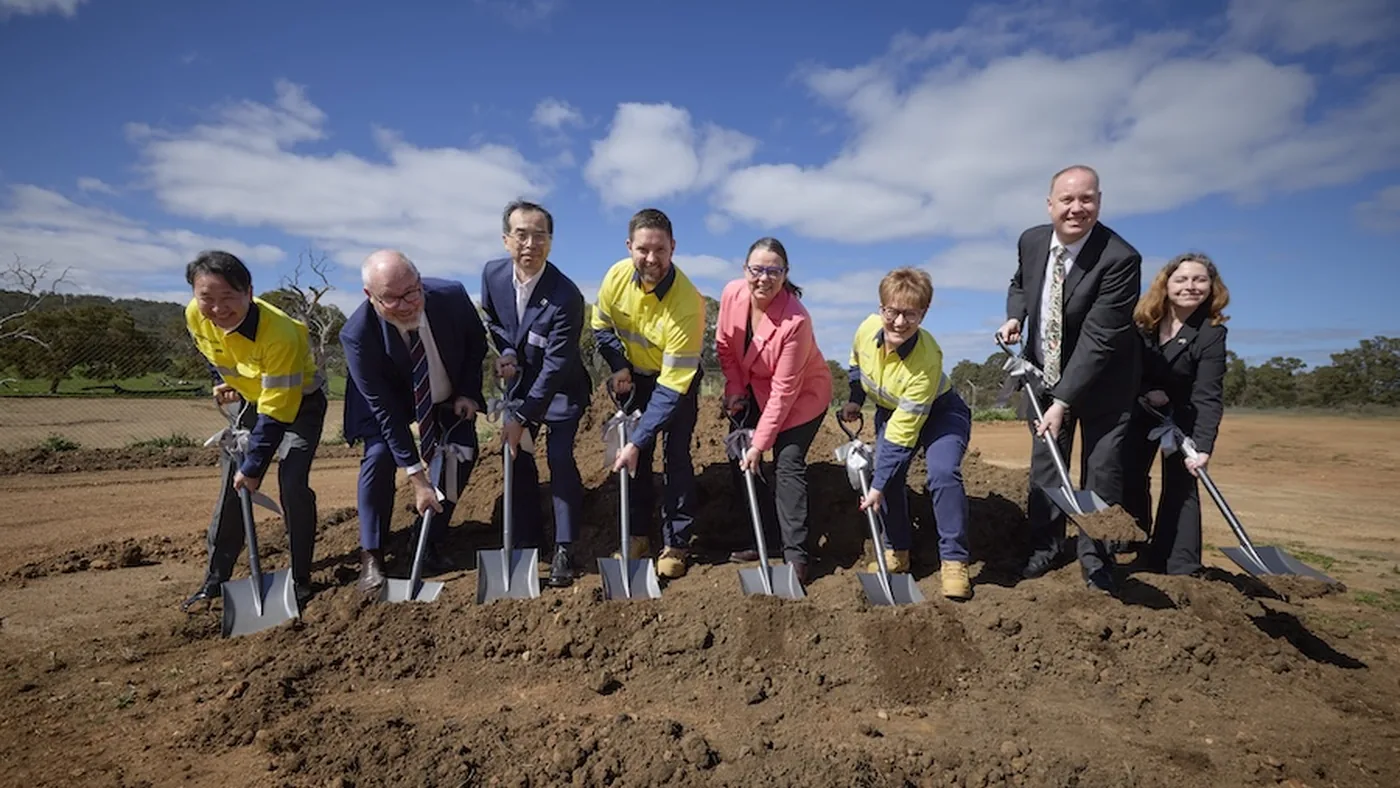
Gallium, Western Australia. Alcoa broke ground on 24 August 2026 on a gallium recovery facility at its Wagerup alumina refinery, with Sojitz Corporation as partner, designed for 100 tonnes a year. The Department of War announced an estimated $174 million of equity financing on 31 August 2026.
Rare earths, Northern Territory. Construction began on 8 October 2026 at Arafura’s Nolans project, after a final investment decision in May. The Australian government committed A$1.2 billion. The project is expected to supply 4–5% of global rare earths demand once operating.
Scandium, New South Wales. The Pentagon’s Office of Strategic Capital made a conditional commitment on 7 August 2026 of up to $400 million as a 25‑year loan to Sunrise Energy Metals’ Syerston project, subject to financial, legal and technical conditions.
Announced in April 2026. Roughly $1 billion toward Ardea’s Kalgoorlie nickel project and about $849 million toward a Tronox rare earths refinery, both in Western Australia.
Trade press puts the total announced in support of Australian projects since the signing at more than A$5 billion. A Critical Minerals Supply Security Response Group was set up in March 2026 to coordinate financing and supply.
Read the list again
A gallium plant. A rare earths refinery. A nickel project. A scandium operation. These are not mines bolted onto somebody else’s supply chain — several of them are precisely the middle of the chain, the processing and refining capacity this site keeps pointing at. They are being built, with American federal money behind them, in Western Australia and the Northern Territory.
Note also what has not happened. Nothing on the list is operating yet; gallium and rare earths are the most advanced and both are still under construction. The EXIM letters of interest are preliminary financing support, not finalised loans. And the price floors contemplated in the framework remain a mechanism the two countries may collaborate on, with no levels set.
The same pattern elsewhere
The bilateral track is wider than Australia. The United States and India signed a critical minerals framework on 26 May 2026 in New Delhi, building on the Forum on Resource Geostrategic Engagement launched in February; the published description commits the two countries to work against coercive market practices and single-source dependence, without specific obligations or timelines. The European Union and the United States signed a memorandum of understanding and agreed a Critical Minerals Action Plan. The January 2026 order on processed critical minerals put Commerce and the US Trade Representative in charge of exactly this kind of negotiation, with tariffs and price supports held in reserve if talks do not deliver.
What this changes
A great deal, and mostly for the good: allied processing capacity outside China is a real answer to a real problem, and the United States is helping to pay for it.
But it is worth being clear-eyed about what it is. A gallium plant at Wagerup and a refinery in Western Australia reduce Chinese leverage; they do not shorten the trip for a concentrate produced in Nevada. For the American operator with ore and no domestic buyer, a year of this framework has changed nothing about where the material goes. The allied strategy and a domestic one are not substitutes, and only one of them is being funded at this scale.