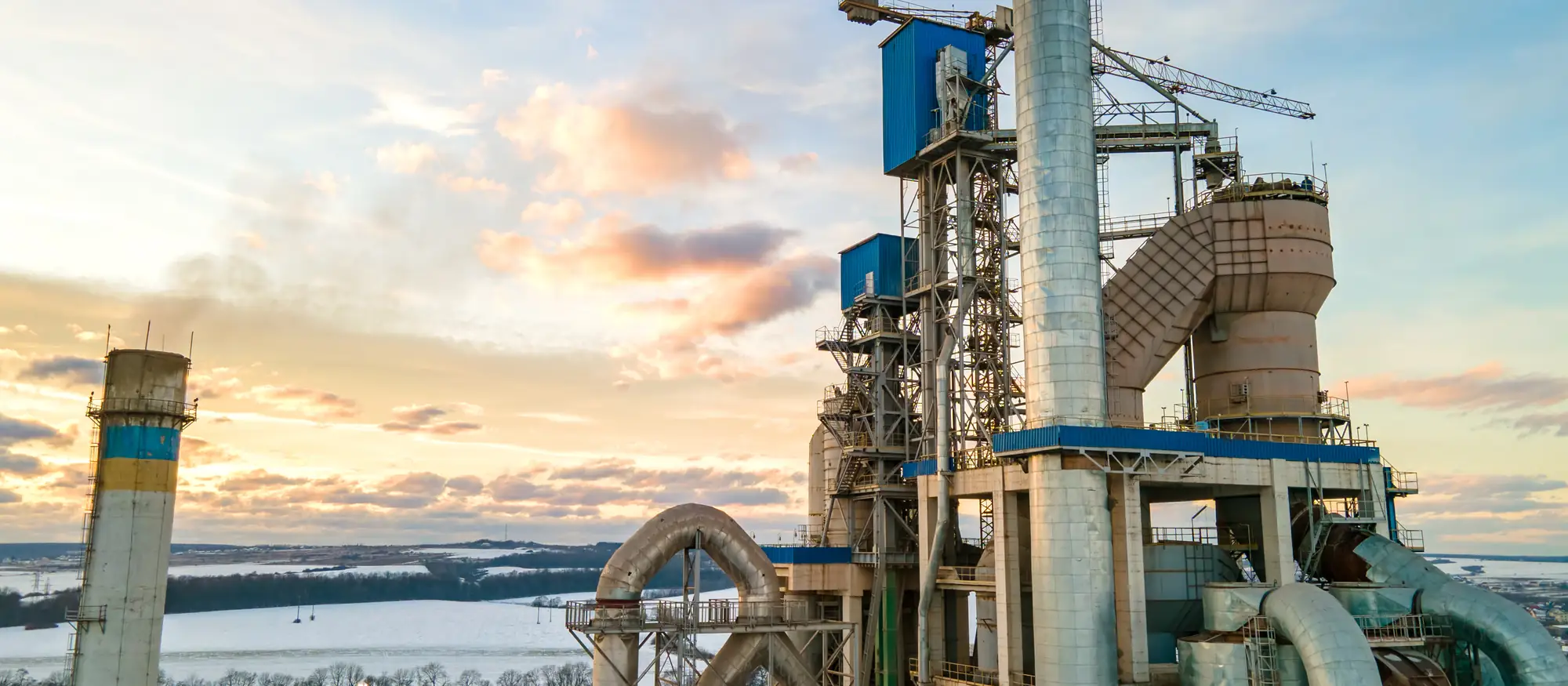
The interior of a smelting plant, a furnace glowing orange behind steel structure and pipework
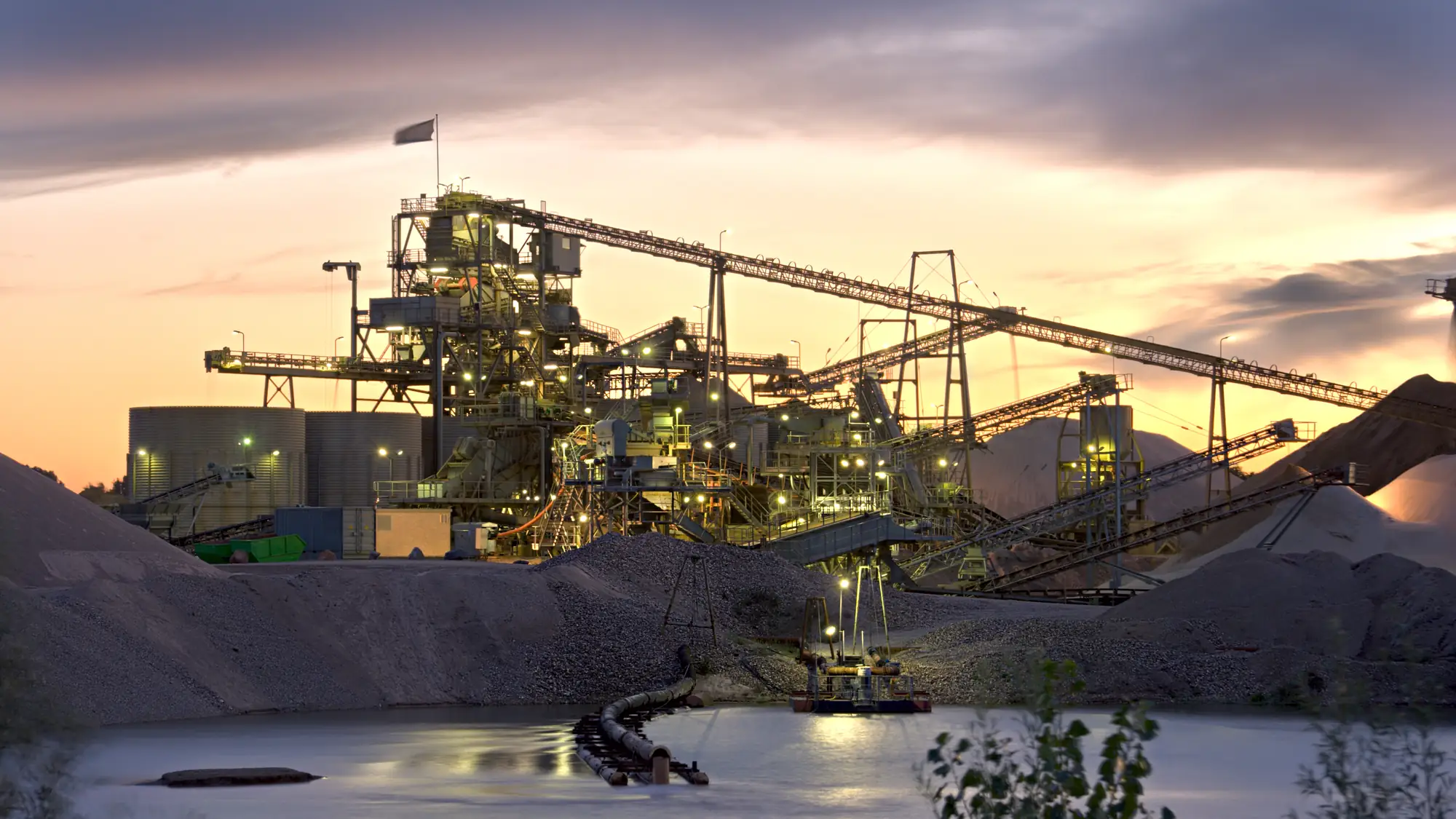
A mineral processing plant lit up at dusk, conveyors and silos above a settling pond

The problem

Mined here. Refined anywhere else.

American ore leaves the country to be turned into metal and comes back as a finished product — carrying freight, tariffs, a margin for every hand it passed through, and months of lead time. All of it added to material that came out of American ground.

Smelter interior — the step that left

Processing plant running at dusk

This is the problem

The round trip, in one American mine

American ore goes out. Refined metal, battery chemicals and finished magnets come back. The American buyer pays for both journeys, and for every hand in between.

What returns is rarely just metal. It is separated oxides, battery-grade chemicals, alloys, powders and finished components — the refined inputs a factory actually buys. Follow it through one operation: the clearest live example is not rare earths, it is nickel, and the United States has exactly one nickel mine.

1970 UNITED STATES Mineore Millconcentrate Smelter+ refinery Manufacturerfinished goods Four steps, one country. Today UNITED STATES OVERSEAS Mineore Millconcentrate Manufacturerfinished goods Smeltersomeone else's Refinerysomeone else's concentrate out finished material back + freight + tariff + months
The only thing that moved is the furnace. Everything either side of it stayed where it was.

Step by step, at Eagle Mine

1Mined

Marquette County, Michigan

The underground Eagle Mine — bought by Talon Metals from Lundin Mining in January 2026 — is the only operating nickel mine in the United States.

~10,000 t Ni in concentrate

2Concentrated

Humboldt Mill

Ore is milled and floated into a nickel-copper concentrate on site. Cobalt rides along with it — all 300 t of US mined cobalt in 2025.

Concentrate, not metal

3Exported

Shipped to Canada and overseas

USGS puts it plainly: the concentrate “was exported to smelters in Canada and overseas.” The last US primary nickel refinery, Port Nickel in Louisiana, closed in 1985.

No domestic buyer

4Refined abroad

Someone else's furnace

For cobalt the destination is stark: China mined 2,000 t of it in 2025 and still “remained the world leading producer of refined cobalt.”

80% of global processing

5Bought back

Returned as finished metal

The US then imports it. Cobalt runs 79% net import reliance. Nickel's headline is 41% — but USGS notes that excluding scrap it would be “nearly 100%.”

Freight + margin + months

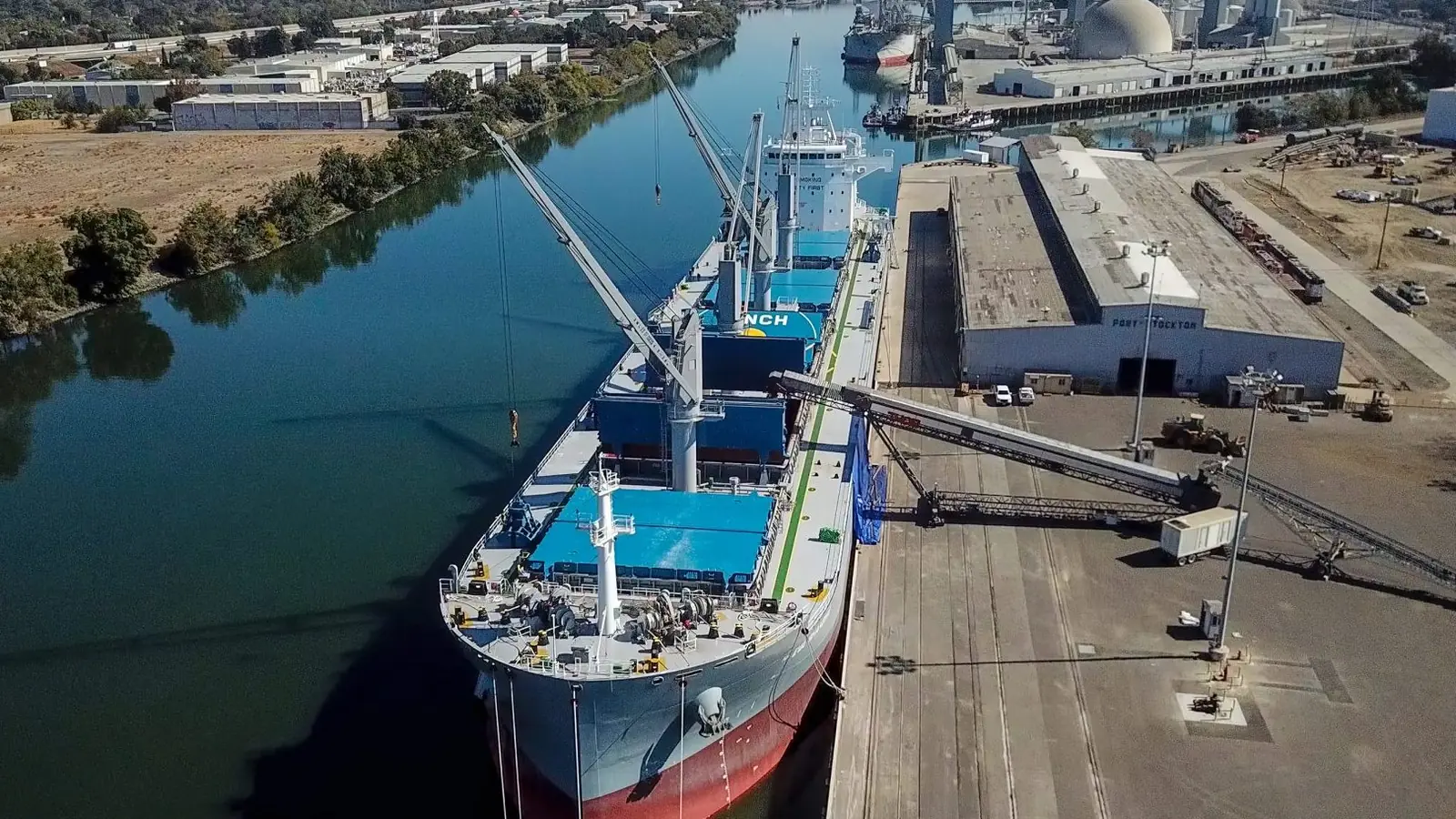
A bulk carrier loading at a river port, conveyor boom swung over the hold
Out. Concentrate leaves by ship. The US exported an estimated 340,000 t of copper ore and concentrate in 2025.
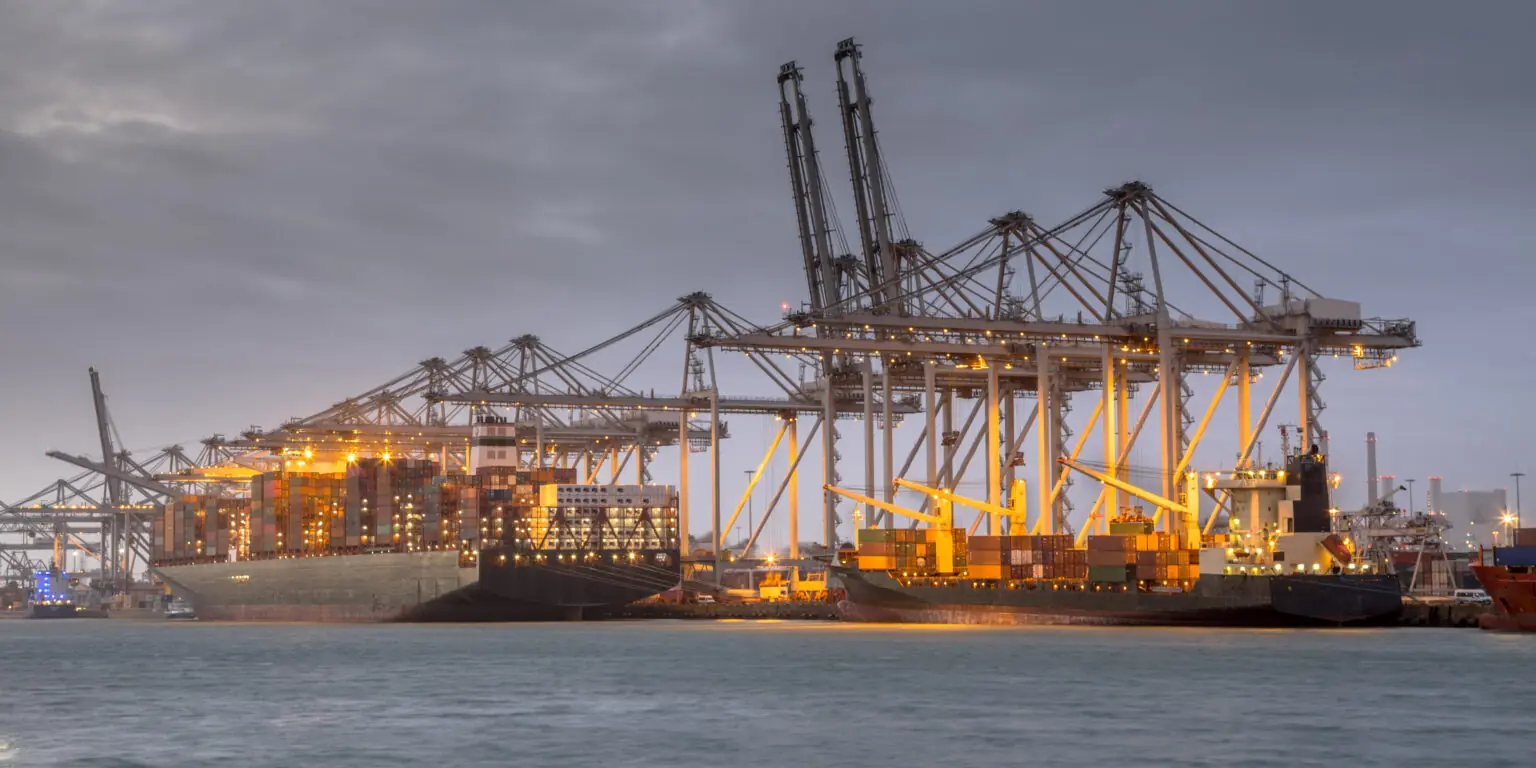
Container cranes and ships at a port terminal at dusk
Back. The same material returns as finished metal and manufactured goods, carrying freight, tariff and months of lead time.

Source: USGS MCS 2026, Nickel · Cobalt

What the detour costs

Ask where America’s minerals problem lies and most people will say we stopped mining. We did not. The United States mined $112 billion of nonfuel minerals in 2025, more than the year before, and its share of global exploration spending has risen since 2018.

What left was the middle. Ore comes out of American ground, goes abroad to be turned into metal, and is sold back to American manufacturers as a finished product. Michigan’s nickel and cobalt are exported to Canada to be refined. More than half of US copper concentrate leaves the country, most of it to Asia. The country that does most of the world’s refining then sells the metal back.

Every handoff in that chain is a price. Freight out and freight back. A margin for each intermediary. A tariff line on the return leg. Months of lead time an American buyer cannot compress. None of it buys a single extra pound of metal — it is paid for having the work done somewhere else, on material that was already here.

And the money follows the furnace, not the pit. The one federal production credit that pays for this work pays whoever refines the mineral to specification, not whoever dug it out. Ship the concentrate and you have handed that credit abroad along with the ore.

In figures we can source

~340,000 t
of copper ore and concentrate exported from the US in 2025
Over half
of US copper concentrate leaves the country, most of it to Asia
57%
net import reliance on refined copper — the metal, not the ore
~100%
nickel import reliance once scrap is excluded, on the USGS’s own note
79%
net import reliance on cobalt
2
primary copper smelters left standing in the United States

USGS Mineral Commodity Summaries 2026 · Fastmarkets · Resources for the Future

This is the part most people do not know

It depends on the ore — eight chains, eight shapes

There is no single American supply chain. The shape changes with the rock, and two things decide it: how much waste you have to leave behind, and whether the valuable mineral can be separated by physical means or needs chemistry.

Why the mill is almost always at the mine

Because you cannot afford to ship the waste. A representative American copper operation puts 17.5 million tonnes a year of half-a-percent ore through the mill and gets 292,000 tonnes of 27% concentrate out of it — about sixty tonnes of rock for every tonne of concentrate, with more than 98% of the mass staying behind as tailings. The US Geological Survey states the consequence plainly: copper sulphide ores “must be concentrated before they can be economically transported to a smelter.”

Where the grade is high enough the arithmetic reverses and shipping the rock wins — iron ore at 62–64% needs almost nothing done to it. And where the mineral cannot be floated at all, as with laterite nickel, there is no mill to build: the beneficiation is deferred and replaced by a furnace or an autoclave at the other end.

USGS Open-File Report 2012-1089

Does American ore get milled abroad?

Almost never — and we went looking. The rule holds here as everywhere: the mill sits at the mine because the waste is not worth the freight. Michigan’s Eagle Mine trucks its ore 105 km to the Humboldt Mill, also in Michigan; only the concentrate leaves the country.

The one documented exception in thirty years is the Flambeau mine in Wisconsin, which ran from 1993 to 1997 without a mill and railed 1.9 million tons of ore to Canada to be concentrated and smelted. It was a four-year, very high-grade deposit, and the point was to avoid building a tailings dam for it. That is a permitting story, not a lost-capacity one.

American ore is milled in America. What leaves is the concentrate — and it leaves because the smelters and refineries are gone.

Wisconsin DNR · USGS MCS 2026, Nickel

Where each processing step happens, by ore type
The oreExtractConcentrateConvertFinish
Sulphide concentrateCopper, zinc, lead, nickelMineFlotation millSmelterRefinery

This is the American problem, and it is one step further down than most people think. The ore is milled here; it is the smelting and refining that left. The US has 26 copper mines and two primary smelters. The last primary lead refinery closed in 2013, and nearly all lead concentrate has been exported since. USGS MCS 2026, Lead and Copper

Copper oxide, heap leachSolvent extraction and electrowinningMineno millno smelterTankhouse

Acid is applied to crushed ore on a pad and the copper is plated out as finished cathode on site. No mill, no smelter, no refinery beyond the tankhouse. About 45% of US mined copper takes this route, and the country runs 14 electrowon refineries against two electrolytic ones. USGS Minerals Yearbook, Copper

Taconite iron oreConcentrate and pelletsMineMill + pelletsSteel millFinished steel

The complete chain, still intact. Eight open-pit mines, each with associated concentration and pelletizing plants, and 98% of domestic usable ore product goes to the American steel industry. The US exports pellets, not rock — 2.6 million t of pellets against 1,000 t of raw fine ore in the first five months of 2025. USGS MCS 2026, Iron Ore

Lithium brineNevadaWells, pondsno millChemical plantBattery grade

There is nothing to crush, grind or float — the lithium is already in solution. Commercial US lithium production is a continental brine operation in Nevada, and the chemical is made on site. USGS MCS 2026, Lithium

Hard-rock lithiumSpodumene concentrateMineFlotation millConverterBattery grade

Same metal as the row above. Different ore, completely different chain. Spodumene is milled at the mine into a concentrate, then shipped to a chemical converter. In the first half of 2025, 94% of Australia’s spodumene concentrate exports — about 1.86 million tonnes — went to China. Argus, 2025

Nickel lateriteShip the rockMineno millSmelter or autoclaveMetal or MHP

Flotation does not work on laterite — the nickel is locked in the lattice, so there is no mineral to float. The rock itself is shipped. The Philippines exported 44.97 million wet tonnes of raw nickel ore in 2024, 35.12 million of it to China. Indonesia banned raw exports outright in 2020, and the smelters moved to the ore. USITC; Argus

Bauxite to aluminumThree steps, three countriesMineWash, screenAlumina refinerySmelter

Two to three tonnes of bauxite make one tonne of alumina, so the chemical refinery sits near the mine or the port — and the smelter goes wherever power is cheap, often a third country. US net import reliance is over 75% on bauxite and 71% on alumina, and there is one operating US alumina refinery, at Gramercy, Louisiana. USGS MCS 2026, Bauxite and Alumina

Rare earthsMountain Pass, CaliforniaMineMillSeparationMagnets

The middle being rebuilt in real time. Concentrate shipments to China stopped in April 2025 and all sales to China in July. Separation runs on site and magnet production began in December 2025 — but NdPr oxide reached 840 t in the second quarter of 2026 against 11,072 t of rare earth oxide in concentrate. The loop is not closed yet. MP Materials, Q2 2026

Happens in the United States Happens abroad Split, or being built This chain has no such step

And one more shape the table cannot show

A good many of the minerals this argument is about are never mined for their own sake. Rhenium and molybdenum come out of copper. Tellurium and selenium come out of the slimes at the bottom of a copper refinery. Cobalt rides along with nickel. Germanium comes from zinc. Gallium is recovered from the alumina refining process — which means a country with no alumina refinery structurally cannot produce primary gallium, however much bauxite it has and whatever it does about mining.

The United States has one operating alumina refinery. That is the whole explanation for why you can hold the ore and still not get the metal, and no amount of permitting reform touches it.

The words are already there. The furnace is the part that is missing.

There is no shortage of political will behind American minerals. What there is a shortage of is precision about which part of the chain anyone is talking about. “Mining” and “processing” get used interchangeably, and they are not the same industry, do not face the same constraints, and do not respond to the same policy.

The distinction matters because the record is lopsided. A bill on mining permitting passed the House in February 2026. A proclamation on processed critical minerals, signed the month before, imposed nothing at all and ordered negotiations instead. The country has two copper smelters, both over a century old, and — on the USGS count for 2025 — six primary aluminum smelters, only two of them running at full capacity, against more than thirty at the 1980 peak. Two American mines can open and neither of those numbers changes.

So the question this page tries to answer is narrow and practical: what would actually put a furnace back on American ground, and how do we know?

“For too long, the United States has relied on foreign actors to supply and process the critical materials that are essential to modern life and our national security … the Energy Department will play a leading role in reshoring the processing of critical materials.”

Chris Wright, Secretary of Energy · 13 August 2025

“… the minerals powering our energy, defense, and technology supply chains are mined and processed in the United States, which is becoming a mineral powerhouse once again.”

Doug Burgum, Secretary of the Interior · 7 November 2025

“We need to mine. We need to process. And we need to refine. And we need to produce the products of advanced manufacturing.”

And, later in the same address: “We need steel. We need aluminum. We need zinc. We need copper. We need to smelt. We need to pour.”

Howard Lutnick, Secretary of Commerce · CSIS keynote, 3 February 2026

“We have watched as the complex, capital-intensive, and often challenging work of mining, separating, and processing these minerals has migrated overseas.”

Michael Cadenazzi, Assistant Secretary of War for Industrial Base Policy · Senate Armed Services testimony, 24 February 2026

At an industry roundtable on 7 August 2026 the President said “we’re making mining great again” and spoke of “reclaiming America’s rightful place as the minerals superpower of the world.” Those remarks were about mining. We have not found a presidential quotation about smelting or refining, and we are not going to write one. Roundtable transcript, 7 Aug 2026 · Bloomberg via MINING.com, 7 Aug 2026

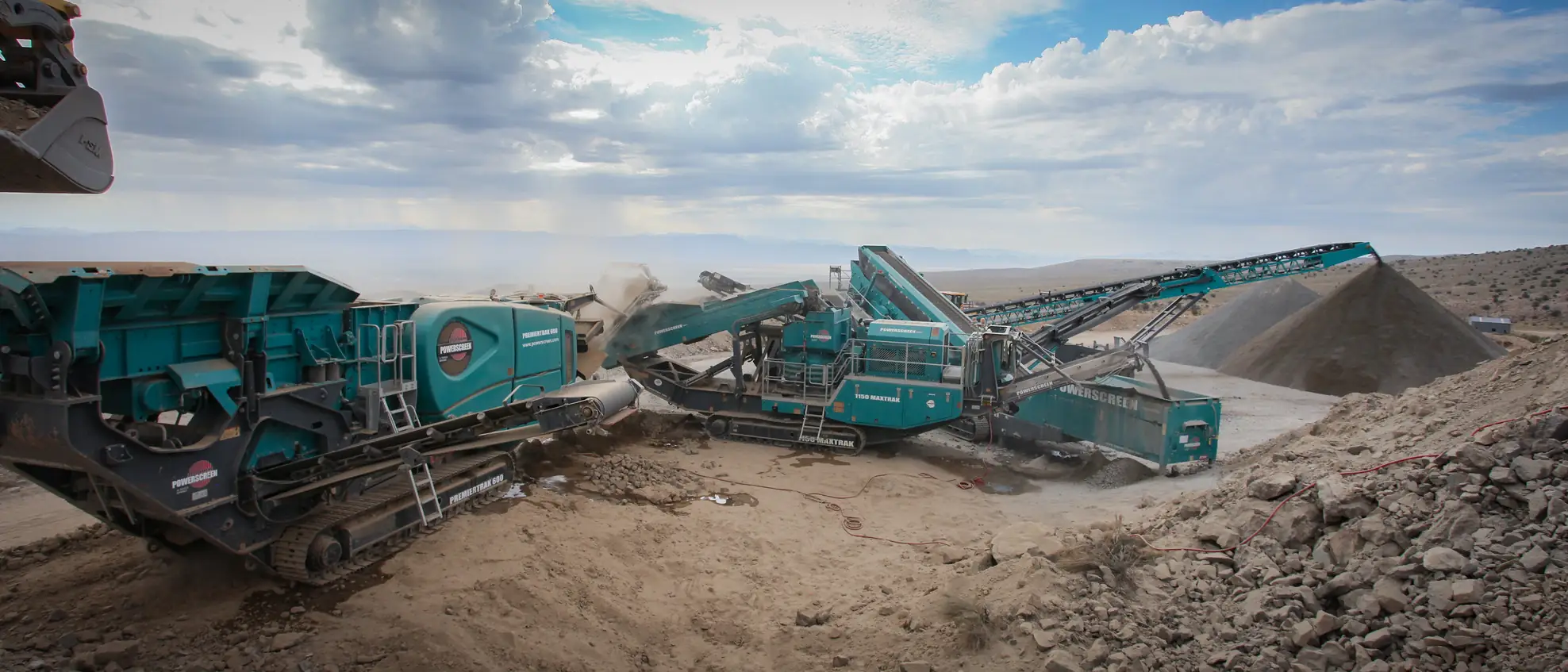
A primary crusher and conveyor gallery at an American mine site, ore stockpiled below

Crushing and grinding stayed. Smelting and refining did not.

The step that has to come back

What has already been done

Twelve entries, March 2025 – August 2026

Advocacy for domestic processing usually starts from scratch, as though nothing had happened. A good deal has happened. Some of it is in force, some of it expires, some of it was announced and imposed nothing, and one bill everyone cites is not law. Knowing which is which is the difference between an argument and a press release.

This is a selection, not a complete catalogue. Among the instruments it leaves out: EO 14415 of 20 July 2026, which tightens defence-acquisition rules for domestic materials; the Defense Production Act section 101 determination of 30 July 2026 covering black mass, magnet scrap and other recoverable feedstock; and the $2 billion stockpile appropriation and $5 billion Industrial Base Fund in the July 2025 reconciliation act. Two entries below are company projects rather than government instruments, and one is a bill that is not law; they are here because they are the concrete tests of everything else.

  1. 20 Mar 2025In force

    EO 14241 — Immediate Measures to Increase American Mineral Production

    Invokes Defense Production Act Titles III and VII, delegates sections 301, 302 and 303 authorities to the International Development Finance Corporation and section 303 to Defense, and waives the DPA section 303(a)(5) requirement for a presidential shortfall determination on projects cumulatively above $50 million.

    Federal Register, 25 Mar 2025 · CRS IN12540

  2. 10 Jul 2025In force, 10-yr term

    The Defense–MP Materials agreement

    $400 million of preferred stock, a $150 million loan, and a warrant allowing the department up to about 15% of the company. On the demand side: a $110/kg NdPr price floor for ten years from the fourth quarter of 2025, under which the government pays the difference below the floor and takes 30% of the surplus above it, plus a ten-year 100% offtake of 7,000 t/yr of magnets with a guaranteed $140 million minimum annual EBITDA. This is the only US instrument that has actually underwritten a processing margin, and $1 billion of commercial bank debt followed it.

    Federation of American Scientists, 15 Jul 2025 · MP Materials, 10 Jul 2025

  3. 30 Jul 2025In force — cathode undecided

    Proclamation 10962 — copper

    A 50% tariff on semi-finished copper products and copper-intensive derivatives from 1 August 2025, covering $15.5 billion of 2024 imports. It also directs Commerce to implement a domestic-sales requirement starting at 25% in 2027 and export controls on high-quality scrap. Refined cathode was not tariffed. Commerce recommended a phased 15% in 2027 rising to 30% in 2028, contingent on an update due 30 June 2026. That update was submitted; its contents have not been made public and no decision has been announced.

    Federal Register, 5 Aug 2025 · CRS IN12614, 30 Sep 2025

  4. 24 Oct 2025Expires — 2 yrs

    Proclamation 10987 — Clean Air Act relief for copper smelters

    Exempts listed primary copper smelters from EPA’s May 2024 Copper Rule under Clean Air Act section 112(i)(4), a rarely used authority, “for a period of 2 years beyond the Copper Rule’s relevant compliance dates.” It is a reprieve for the two remaining smelters, not a durable reform, and it runs out.

    Federal Register, 3 Nov 2025

  5. 7 Nov 2025In force

    The final 2025 List of Critical Minerals

    Sixty minerals. Ten were added: boron, copper, lead, metallurgical coal, phosphate, potash, rhenium, silicon, silver and uranium — copper, silver, lead, potash, silicon and rhenium on updated supply-disruption modelling and the rest on interagency recommendation. Listing is the gateway to several statutory programmes — but not, on its own, to the 45X production credit, which is still pegged to the February 2022 list.

    Federal Register, 7 Nov 2025 · Interior, 7 Nov 2025

  6. Dec 2025Announced

    Korea Zinc, Clarksville, Tennessee

    $6.6 billion of capital expenditure, $7.4 billion in total, for 540,000 t/yr across thirteen non-ferrous products — eleven of them on the US critical minerals list. The Department of War is providing $1.4 billion and Commerce $210 million of CHIPS Act award funding: about a 24% federal share, on an acquired brownfield site rather than a greenfield build. Site preparation 2026, construction 2027–29, phased operation from 2029, around 750 jobs.

    Korea Zinc, Dec 2025

  7. 14 Jan 2026No remedy in force

    Proclamation 11001 — processed critical minerals

    Commerce found that imports of processed critical minerals and their derivatives threaten national security. The proclamation imposed no tariffs, no price floors and no minimum import prices. It directs Commerce and the Trade Representative to pursue negotiated agreements, says they “should consider price floors,” and reserves authority to impose “minimum import prices for specific types of critical minerals” if negotiation fails. A status report was due within 180 days — by 13 July 2026. We have found no public account of that report, or of anything that followed it.

    Federal Register, 20 Jan 2026

  8. 26 Jan 2026Announced, contested

    Inola, Oklahoma — the first new US primary aluminum smelter in almost fifty years

    Emirates Global Aluminium 60%, Century Aluminum 40%, 750,000 t/yr, reported at about $4 billion, behind a $500 million Energy Department award reconfirmed in February 2026 and $255 million of state incentives. Power was not secured at announcement. The Oklahoma Attorney General sued on 2 June 2026; the case was removed to federal court and remanded to Rogers County District Court on 4 September 2026; the Justice Department announced a statement of interest supporting the project on 28 August 2026; and the town of Inola has extended its own moratorium to 7 April 2027 and put an ordinance banning aluminum production inside town limits to a vote. It is the live test of whether any of this works.

    Century Aluminum, 26 Jan 2026 · DOE, 10 Feb 2026 · Oklahoma Voice, 4 Sep 2026 · OK Energy Today, Sep 2026

  9. 4 Feb 2026Not law

    H.R. 4090 — Critical Mineral Dominance Act

    Passed the House 224–195 on roll call 55, with ten Democrats in favour. It codifies provisions of executive orders on domestic mining and hardrock mineral resources. It was referred to the Senate Energy and Natural Resources Committee on 5 February 2026; the Public Lands, Forests and Mining Subcommittee held a hearing on it on 15 July 2026, and it has not been reported out. Note what it is and is not: it is a mining permitting and public-land bill. Processing is not its subject.

    congress.gov, H.R. 4090 · Clerk of the House, Roll Call 55

  10. 2 Apr 2026In force

    Section 232 restructured — and a preference for US-smelted metal

    From 6 April 2026 the tariff base shifted from metal content to full customs value: 50% for articles made entirely or almost entirely of the covered metals, 25% for lower-content derivatives, and — the part that matters for capacity — a 10% reduced rate for products using US-smelted or cast inputs. That is a downstream preference for domestically smelted metal rather than simply a tax on imports.

    White & Case, Apr 2026 · Federal Register, 4 Jun 2026

  11. 20 Jul 2026In force

    Proclamation 11045 — the aluminum onshoring programme

    Halves the Section 232 duty on primary aluminum from 50% to 25% for companies with an approved onshoring plan to build, refurbish or expand a US primary aluminum facility, with construction beginning by 20 January 2029. Approved companies get annual duty-reduced import allowances tied to the anticipated output of the US facility once complete. Mechanically it converts a tariff wall into an entitlement earned by building capacity — the closest thing in current US law to a capacity-contingent subsidy delivered through trade policy.

    Federal Register, 23 Jul 2026 · Greenberg Traurig, Jul 2026

  12. 6 Aug 2026Effective 4 Dec 2026

    Proclamation 11052 — polysilicon, and the first real minimum import price

    A 15% tariff plus minimum import prices — $21/kg for polysilicon, $100/kg for ingots and wafers, $0.22/watt for cells, $0.38/watt for modules — for goods entered from 4 December 2026. Importers must document that entered value meets the floor and that goods will be sold domestically at floor-level prices; if not, a specific tariff up to the floor stacks on top of the 15%. No expiry. This is the template that would be applied to processed critical minerals if the negotiating track fails.

    Federal Register, 11 Aug 2026 · White & Case, Aug 2026

Five levers, ranked by the evidence behind them

Strongest first, not loudest first

These are not ranked by how often they are demanded. They are ranked by how much published evidence supports the claim that they would move actual smelting and refining capacity. The loudest ask in the industry sits fourth.

01Best evidenced

Power, on a twenty-year contract

Every other lever is an argument. This one is arithmetic.

Electricity is roughly 30% of the cost of producing aluminum. A modern 750,000 t/yr smelter needs about 11.1 TWh a year — the annual consumption of a city the size of Nashville. In 2023, industrial rates in the states a smelter would actually be built in averaged $73.42 per MWh. Canadian hydro-based rates were $26.50 to $41. The Aluminum Association — an interested party, and specific about it — says the threshold is “a contract for at least 20 years at or below $40 per MWh.”

The gap is widening, and not because of anything to do with metals. Data centres are paying over $100 per MWh for the same electrons. PJM capacity prices went from $28.92 per MW-day to $269.92 and then to $329.17 over the next two auctions — a 1,038% increase in three years. Alcoa’s chief financial officer put the consequence plainly: “any new smelter capacity is going to have to struggle with that competition because the other players are going to be paying a lot more than what is needed for an economic smelter.”

We have found no federal instrument in force that delivers long-term industrial power to a smelter — no power-marketing set-aside, no industrial tariff class, no contract backstop. If one exists, we have not located it. It is the best-documented constraint in this whole file and the one with the least policy attached to it.

Stated fairly: US power is not uniformly uncompetitive. Aurubis reports energy costs at its German plants running roughly three times those at its US plants. American electricity is expensive against hydro and against Chinese cost structures — not against everyone.

The Aluminum Association, May 2025 · S&P Global, 12 Jan 2026 · Reuters via The Spokesman-Review, 7 Jul 2026 · Columbia CGEP, 5 May 2026
11.1 TWh
a year for one 750,000 t/yr aluminum smelter
$73.42
average industrial rate, candidate states, 2023, per MWh
$26.50–41
Canadian hydro-based industrial rate, per MWh
$40
per MWh, 20-yr, the stated threshold for new capacity
1,038%
rise in PJM capacity price over three years, driven mainly by data centres
02Evidenced, with a caveat

A floor under the processing margin — not under the metal price

A custom smelter does not sell metal. It sells a service, and it is being paid nothing for it.

This is the single most misunderstood point in the whole argument. A smelter that buys concentrate on the market earns a treatment and refining charge — a margin, not a price. A floor under the copper price does nothing for it. And that margin has gone to zero: the 2026 annual benchmark settled at $0, the lowest ever agreed, and spot terms reached negative $90 a tonne in March 2026. Smelters paying miners for the privilege of doing the work.

A floor does move capital when it is written against the right number. The rare earth agreement of July 2025 is the proof: a ten-year floor and offtake brought $1 billion of commercial bank debt in behind it. The IEA has put numbers on the comparison — price support buys about 2.4 percentage points of project IRR at roughly $18 million a year of fiscal cost, against 1.3 points from cash grants at $3.5 million a year. More powerful per intervention, about five times more expensive in annual fiscal cost, and roughly 2.8 times more expensive per percentage point of return it delivers.

The concrete design for copper already exists in print: a contract-for-difference on treatment and refining charges, paying a smelter when the market margin falls below a negotiated breakeven, restricted to market-purchased concentrate so that captive mine-and-smelter pairs are not subsidised for internal transfers.

Stated fairly: the people who designed that mechanism doubt it generalises. Rare earths suited it because the market is small enough that a floor is affordable; extending the same support to copper or nickel “would require substantially greater taxpayer funding.” Resources for the Future goes further, finding no reason to expect US capacity would be built even under multilateral floors. And one company has structured a $3.1 billion heavy rare earth and magnet project — on a January 2026 letter of intent, with about $1.6 billion of federal grant, loan and equity inside it — that nonetheless “excludes the need for government price supports or government offtake agreements.”

Columbia CGEP, 5 May 2026 · IEA, Global Critical Minerals Outlook 2026 · Resources for the Future, May 2026

$0
2026 annual copper treatment and refining benchmark
−$90/t
spot treatment terms, March 2026
2.4 pts
IRR gain from price support, at ~$18M/yr fiscal cost
1.3 pts
IRR gain from cash grants, at ~$3.5M/yr
$110/kg
the one processing floor actually in force, for NdPr
03Exists, but does not reach far enough

An operating credit that reaches the furnace

Section 45X already pays for refining. It just does not pay for copper.

The 45X advanced manufacturing production credit is worth 10% of production costs for an applicable critical mineral, and the 2024 final rule settled the question that matters here: the costs of “extracting, acquiring, processing, purifying, refining, and converting” all count, and the processing or refining has to happen in the United States for anything to qualify. It is uncapped. It is the most scalable operating subsidy in current law, and it is pointed at exactly the step that left.

Three things limit it. Eligibility tracks the February 2022 list of fifty minerals, so copper, silver, lead, potash, silicon and rhenium — all added in November 2025 — are not eligible. It now phases down: 75% in 2031, 50% in 2032, 25% in 2033, gone in 2034. And metallurgical coal gets 2.5% rather than 10%.

Why an operating credit rather than a capital grant? Because the gap is an operating gap. Rare earth separation costs $2,000 to $4,000 a tonne in China against over $10,000 domestically. A two-and-a-half to five times running-cost difference cannot be closed by writing a cheque for the building.

Where it stands: two bills would fix the list — H.R. 8277 to add copper, and the Critical Mineral and Extraction Tax Parity Act to align 45X with the current USGS list. Both are backed by the National Association of Manufacturers. Neither is law.

CRS IF12809, 13 Aug 2026 · CSIS on the 45X final rule · NAM, 21 May 2026

10%
of production costs, for an applicable critical mineral
2022
the list 45X still tracks — copper is not on it
2034
the year the credit disappears entirely
$2–4k
Chinese rare earth separation cost per tonne
$10k+
the same work, domestically
04Documented, and aimed at the wrong target

The permits that actually bite

None of the three gates that have stopped a US processing plant is federal review on federal land.

Permitting reform is the industry’s loudest ask, and the reform on the table is about mines. Look at what has actually stopped processing plants.

Air standards on existing smelters. EPA’s May 2024 primary copper smelting standard was severe enough that the response was a presidential exemption under Clean Air Act section 112(i)(4) — two years past each compliance date. Suspending a standard is not reforming a process, and it expires.

State and local permitting, and nuisance litigation. The Inola aluminum smelter had a $500 million federal award, $255 million of state money and the administration’s explicit backing. On 2 June 2026 the Oklahoma Attorney General petitioned Rogers County District Court for injunctive relief and abatement of an anticipated public nuisance. His June petition cited authorisation to emit more than a tonne of hydrogen fluoride a day, contamination risk to the Verdigris River, a continuous draw above 1,000 MW, and siting within three miles of schools, homes and farms. The sharpest challenge to the first new American aluminum smelter in almost fifty years came from a state attorney general of the same party as the administration funding it — and it is still being litigated. The case was removed to federal court and remanded back to Rogers County on 4 September 2026; the Justice Department announced a statement of interest supporting the project on 28 August 2026, arguing that environmental concerns belong in Clean Air Act and Clean Water Act permitting rather than a premature state suit; and on 3 September the owners submitted a corrected air-permit application cutting permitted fluoride emissions 37% below the original proposal.

Wastewater discharge for hydrometallurgical separation. A heavy rare earth separation plant in Texas carrying US$258 million of committed defence funding has stalled on wastewater permitting; its chairman said progress “has stalled in recent months” and the company is serving US buyers from South Asia instead. Public money did not overcome a discharge permit.

Stated fairly: the SPEED Act passed the House in December 2025 and is not law — and the Congressional Research Service finds it contains no provisions specific to mineral processing facilities. Resources for the Future also notes a documented inverse relationship between review duration and litigation probability, so shortening review may simply move the fight to court.

Oklahoma Voice, 2 Jun 2026 · Oklahoma Voice, 4 Sep 2026 · Justice Department, 28 Aug 2026 · CRS IF13180, 10 Mar 2026 · Federal Register, 3 Nov 2025

3
gates that have actually stopped US processing plants
0
of them federal review on federal land
5–6 yrs
industry’s own estimate of smelter approval time
1 t/day
hydrogen fluoride at issue in the Inola litigation
$258M
committed defence funding stalled by a discharge permit
05Weakest on the evidence

Somebody has to buy the output

A warehouse is not a customer.

Stockpiling carries the largest headline figure of any single programme here and is the weakest lever on the evidence, and the analysts who agree on nothing else agree on this. The Breakthrough Institute’s conclusion: “the U.S. needs to build projects more than it needs to build stockpiles.” Resources for the Future calls it a “minimal improvement in demand uncertainty,” because defence demand sits far below consumer market demand. On Project Vault specifically — $12 billion, $10 billion of it export-bank lending, structured as a subscription rather than a reserve — the Peterson Institute warns that voluntary participation invites adverse selection, and that processed derivatives are far harder to store than petroleum.

The one design that has functioned as demand assurance is the offtake with a balance-sheet consequence: a ten-year commitment to take 100% of output with a guaranteed minimum annual EBITDA. That is a customer. A stockpile is inventory.

The hardest version of this objection: the same legislation that expanded support for extraction and processing ended the clean vehicle credit and put 45X on a phase-out. CSIS said at the time that it “does not deliver on demand-side measures needed to drive sustained market demand from key sectors.” You cannot underwrite a refinery on defence demand alone, and a refinery built against demand that was withdrawn is the exact failure mode critics are pointing at.

Breakthrough Institute, 21 Jul 2025 · Peterson Institute, May 2026 · CSIS, 9 Jul 2025

$12bn
Project Vault, as announced
~0.5 yr
US consumption covered by stockpiled germanium
$140M
the EBITDA floor in the one offtake that worked
7,000 t/yr
magnet output under 100% offtake for ten years

What it costs

Published capital figures

Published capital costs for new US mineral processing capacity
FacilityCapacityCapital costSource
Primary aluminum smelter (Inola, Oklahoma)750,000 t/yr~$4.0bn OK Energy Today, Sep 2026
Primary aluminum smelter (Century’s earlier Kentucky proposal)not stated$5.0bn Canary Media, Jan 2026
Multi-metal critical minerals smelter, 13 products540,000 t/yr$6.6bn Korea Zinc, Dec 2025
Copper smelter, greenfieldnot stated$1.8–5.0bn Fastmarkets / CGEP
Heavy rare earth separation, metal and alloy, magnets10,000 t/yr magnets$3.1bn USA Rare Earth, Jan 2026
Rare earth magnet expansion plus separation3,000 → 10,000 t/yr~$1.95bn FAS, Jul 2025
Synthetic graphite anode plant — eligible project investment, not a published capex31,500 t/yr$0.94bn NOVONIX, Dec 2024

Copper is given as a range because published estimates are not reconciled: one analysis puts a greenfield US copper smelter at $1.8–2.5 billion including sulphur capture and an acid plant, another at up to $5 billion. Anyone quoting a single authoritative figure is guessing.

And what public money actually bought

The clearest worked example is the zinc and critical minerals smelter at Clarksville, Tennessee: about $1.61 billion of identified federal support against $6.6 billion of capital expenditure — roughly a 24% federal share — on an acquired brownfield site rather than a greenfield build. Buying an existing site and expanding it was the structure that penciled.

The clearest failure is not financial. A heavy rare earth separation plant in Texas carried US$258 million of committed defence funding and stalled on a wastewater permit. Money was not the constraint.

And the number that should govern the whole conversation: new copper mines take sixteen to seventeen years from discovery to commercial production. No tariff set today produces additional American cathode before the mid-2040s from any project that has not already broken ground. That is an argument for starting, not for waiting.

Columbia CGEP, 5 May 2026 · Fastmarkets

The objections that have to be answered

Stated at full strength

Every one of these is a serious argument made by a serious person, and none of them is answered by repeating that America has the minerals. They are here at full strength because a case that cannot survive them is not worth making.

Capacity that cannot survive the subsidy being withdrawn

This is the strongest objection and it does not go away. Public money does not change a cost structure: Chinese rare earth separation runs at $2,000–4,000 a tonne against over $10,000 domestically, and Chinese copper smelters at less than half the operating cost of facilities elsewhere in the world. Projects supported on national-security grounds “remain not cost-effective to begin with.” The sharpest formulation is about haste: “policies that prioritize speed — through large, front-loaded commitments to specific projects — may therefore increase the likelihood of backing projects that later prove unviable.”

Resources for the Future, May 2026

On the only US evidence there is, tariffs cost downstream more than they gained upstream

The International Trade Commission’s statutory retrospective found that in 2021 Section 232 raised US steel production by $1.3 billion and aluminum production by $0.9 billion, while production in downstream industries was $3.5 billion lower. The Commission was explicit that its results cannot be used to conclude the tariffs did or did not produce a net benefit overall — so neither side gets to claim it settles the question. What it does show is that the measured upstream gain was real, and that measured downstream losses were larger in dollar terms: two separate model outputs the Commission declined to net against each other. And eight years of 10–50% aluminum duties did not stop smelters closing, because the binding constraint was power.

USITC Publication 5405, March 2023

Picking winners, with a bankruptcy already in the record

Roughly $39 billion of federal commitments went to a handful of firms between January 2025 and January 2026 — an analyst’s tally, not a government figure — which “risks distorting markets, weakening competition and reducing incentives for efficiency and innovation.” The precedent is uncomfortably exact: Molycorp went bankrupt in 2015, and Molycorp owned Mountain Pass. The Federation of American Scientists, not a hostile source, raises the same structural worries about the July 2025 agreement: monopoly entrenchment, no competitive bidding, and whether the government negotiated adequate upside for itself.

New Security Beat, 10 September 2026

Allies may simply be the cheaper answer

The trade-off is stated cleanly: “supply resilience favors diversification across allied suppliers over domestic self-sufficiency.” Japan is the empirical case — China’s share of Japanese rare earth imports fell from around 90% in 2010 to under 60% by 2020, and the processing that did it was largely in Malaysia, financed from Tokyo. Against that: allied smelters are also running below 70% utilisation and need the same subsidies, so “buy from allies” is not cost-free; resource-rich countries want their own midstream, not a role as raw suppliers; and the Government Accountability Office found Chinese-manufactured magnets inside F-35 aircraft, which is a problem an allied-sourcing framework running through China does not solve.

Resources for the Future, May 2026; GAO-25-107283, July 2025

Smelters are genuinely dirty, and the objection is not coming from where you would expect

The strongest published statement of the environmental trade-off in this whole record came from a Republican state attorney general suing to stop a smelter his own party’s administration was funding: primary aluminum smelting is among the most polluting heavy-industrial activities there is, and his June 2026 petition put the plant’s authorised emissions at more than a tonne of hydrogen fluoride a day within three miles of schools and homes. The owners have since submitted a corrected permit application cutting that permitted figure by 37%, and the case is still live. Indonesia shows what unconstrained downstreaming produces — 76,301 hectares of deforestation inside nickel concessions. This site’s position is that mining and processing under a regulator a citizen can actually reach is the argument, not an exemption from one.

Manufacturing Dive, June 2026; USITC Working Paper ICA-104, February 2024

The fairest rebuttal to the cost argument

The IEA frames the expense of diversification as a “mineral security premium — a form of economic insurance against major supply risks,” and puts numbers on the consumer incidence: tripling rare earth prices would raise the cost of a car by about 0.1%, and tripling battery mineral prices would raise EV prices by around 5%. If the pass-through really is tenths of a percent, the “too expensive” objection weakens considerably for the small-volume minerals. It does not weaken for copper and aluminum, where the metal is a large share of what the product costs. Both halves of that are true at once.

IEA, Global Critical Minerals Outlook 2026

Where the argument is being made

Read both columns

Making the case

  • To Deliver on the America First Energy Agenda, We Must Dominate the Critical Minerals RaceDan Brouillette · Breitbart · 2 Apr 2026Frames minerals as a household-price and grid-reliability question rather than only a defence one, and goes past permitting to endorse federal capital going directly into domestic mining and refining under American environmental standards.
  • China controls the refinery. Here’s how Trump takes it backBill Crane · Washington Examiner · 7 Aug 2026The closest published piece to this page’s argument: credits the permitting work and the mine reopenings, then says the strategy is half-finished because the chokepoint China holds is conversion, not extraction.
  • Minerals at War: Strategic Resources and the Foundations of the U.S. Defense Industrial BaseGracelin Baskaran and Samantha Dady · CSIS · 14 Jan 2026The historical anchor. America has hit mineral-supply walls repeatedly despite its geology, and processing capacity mattered as much as extraction — in the Korean War the federal government had to finance conversion capacity directly, including a $94 million copper-molybdenum complex in Arizona.
  • Industrial Policy Is Back — And Minerals Are at the CenterGracelin Baskaran and Meredith Schwartz · CSIS · 26 Feb 2026A catalogue of the four instruments now in use — stockpiling, equity investment, public procurement and foreign supply arrangements — aimed at midstream separation and magnets rather than at self-sufficiency. Its own verdict is cautious: public capital cannot substitute for fundamentally sound project economics.

Pushing back

What this page does not claim

The same discipline as the rest of the site. Every one of these is a claim in circulation that a procurement officer, a journalist or a hostile committee staffer would take apart in an afternoon. None of them appears above.

  • That the US has tariffs or price floors on processed critical minerals. Proclamation 11001 imposed none. It ordered negotiations and reserved authority.
  • That the 15%/30% refined copper tariff is in force or scheduled. It was a Commerce recommendation contingent on an update; no decision has been announced.
  • That 45X covers copper. Eligibility tracks the February 2022 list. Bills to change that are pending, not enacted.
  • That permitting reform has been enacted. The SPEED Act passed the House in December 2025 and is not law — and contains nothing specific to processing facilities.
  • That Indonesia’s nickel export ban is a template. Its effectiveness “hinges on a country’s leverage in global markets”; Indonesia held about a quarter of world nickel reserves. The US has no comparable leverage in any processed mineral.
  • That Japan rebuilt domestic rare earth processing. Japan cut Chinese import dependence using Malaysian plants, Australian mines, substitution and stockpiles.
  • That the $39 billion and $100 billion investment figures are government numbers. They are analyst estimates on different bases and they are not reconciled with each other.
  • That a shortage of American metallurgists is documented. The workforce data that exist are about mining engineers, and are mostly from 2023. We found no US dataset on extractive metallurgy or smelter operations staffing.
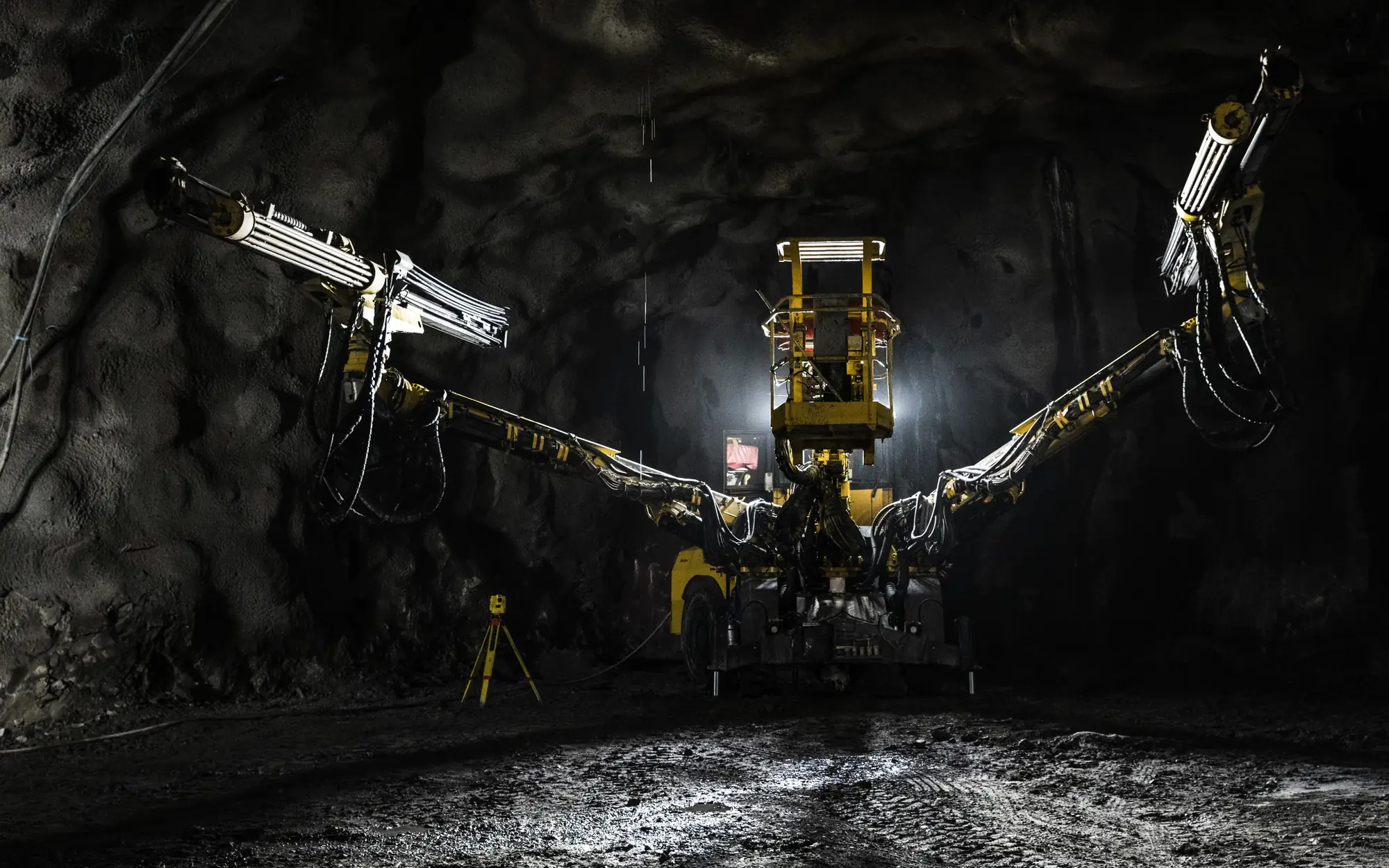
A drill jumbo parked at the face of an underground heading, its booms extended
Development at the face is the cheap part of this argument. The expensive part is the plant that turns what comes out of it into metal.